
Top Website Features That Win Landscaping Clients
First Impressions
Your website is the first place most clients look. Clean layouts, matching brand colours, and high-quality original photos build trust. Avoid clutter. Use a simple structure with a clear logo, easy navigation, and a colour palette that matches your real-world branding. Real photos of your projects, especially before-and-after shots, are more convincing than stock images. Choose readable fonts and keep text sizes comfortable.
A strong first impression is not just about looks. It is about making visitors feel confident that you are organised, professional, and reliable. Consistency across every page is key. Headers, footers, and menus should be in the same place on each page so users never have to search for basic information. Spacing and alignment matter as much as colour and imagery. A site that is easy to scan and does not overwhelm the eye will always be more effective than one packed with too much information.
Think about the mood your website creates. Colours associated with nature, such as greens, browns, and soft earth tones, often work well for landscaping businesses. These shades can make visitors feel at ease and reinforce the idea that you are connected to the natural world. At the same time, your branding should reflect your unique style. If your business focuses on modern garden design, for example, a minimalist palette with crisp lines may suit you better.
Do not underestimate the power of small details. Even the quality of your logo and the sharpness of your images can influence whether a visitor chooses to contact you. If you do not have a professional logo, consider investing in one. Make sure all images are clear and properly sized so they look good on every device.
Finally, remember that first impressions are formed quickly. Most visitors will decide whether to stay or leave your site within a few seconds. For this reason, put your most important information, such as what you do and how to contact you, where it can be seen without scrolling.

Proof and Trust
Clients want clear evidence that you can deliver quality work. A project gallery is your chance to show off your skills. Do not just post a collection of random images. Instead, group your work by category, such as patios, garden redesigns, or regular maintenance. For each project, include a short summary that explains the client’s challenge, your approach, and the result. If you can, add a few lines about the materials used or any unique solutions you provided. This gives potential clients a sense of your process and your attention to detail.
Case studies go further by telling the full story of a project. For example, describe how you worked with a family to transform a neglected garden into a space for children to play. Explain the steps you took, from planning to completion, and include feedback from the client if possible. This level of detail helps visitors imagine how you might handle their own needs.
Testimonials are another key trust signal. Use real feedback from satisfied clients, and where you have permission, include first names and a general location. Specific praise carries more weight than generic comments. For example, “James from Oxford said, ‘The team turned our sloped garden into a level, usable space in less than three weeks.’” If you can, add photos of the finished project alongside the testimonial.
Contact details must be easy to find. Place your phone number and email address at the top and bottom of every page. Add a simple contact form so visitors can get in touch without leaving your site. For UK businesses, displaying your company number and registered address is good practice and helps to meet legal requirements. Always include a privacy policy and cookie notice to show you handle data correctly.
Calls to Action and Navigation
A website should guide visitors towards the next step. Clear calls to action are vital. Use direct phrases such as “Request a Free Quote,” “Book a Consultation,” or “See Our Work.” Avoid vague language. Tell visitors exactly what will happen when they click a button or fill out a form.
Keep forms short and straightforward. Only ask for the information you really need, such as name, email address, phone number, and a brief description of the project. Research shows that shorter forms lead to higher response rates. Long or complicated forms can put people off.
Navigation should be simple and familiar. Use menu labels that make sense, such as “Services,” “Gallery,” “About Us,” and “Contact.” Arrange your menu so that visitors can find what they need with as few clicks as possible. Avoid clever or unusual labels that might confuse people. A search function can also help if your site has many pages.

Mobile, Speed and Accessibility
Most people now browse websites on their phones. Your site must look good and work smoothly on all screen sizes, from small mobiles to large desktops. Use responsive design so that images, text, and buttons adjust automatically to fit the device. Test your site on several types of phones and tablets to check for any problems with layout or readability.
Speed is just as important as appearance. If your website is slow to load, visitors will leave before seeing your content. Compress images so they take up less space, use reliable hosting, and avoid unnecessary features that might slow things down. Aim for pages that load in three seconds or less.
Accessibility means making your site usable for everyone, including people with disabilities. Use clear, high-contrast text and backgrounds. Add alternative text to images so that screen readers can describe them. Make sure all navigation can be done with a keyboard, not just a mouse. These steps are not only considerate, they are also required by UK law. Small changes can make a big difference to potential clients who might otherwise struggle to use your site.
Local Search
A well-designed website is only valuable if people can find it. For landscaping businesses, local search is the main way clients discover you. Use plain language to describe your services, such as “garden design,” “patio installation,” or “lawn maintenance.” Mention your service area naturally in your text. For example, “We provide garden design in Cambridge and surrounding villages.” Do not repeat the location too often, as this can harm your site’s search ranking.
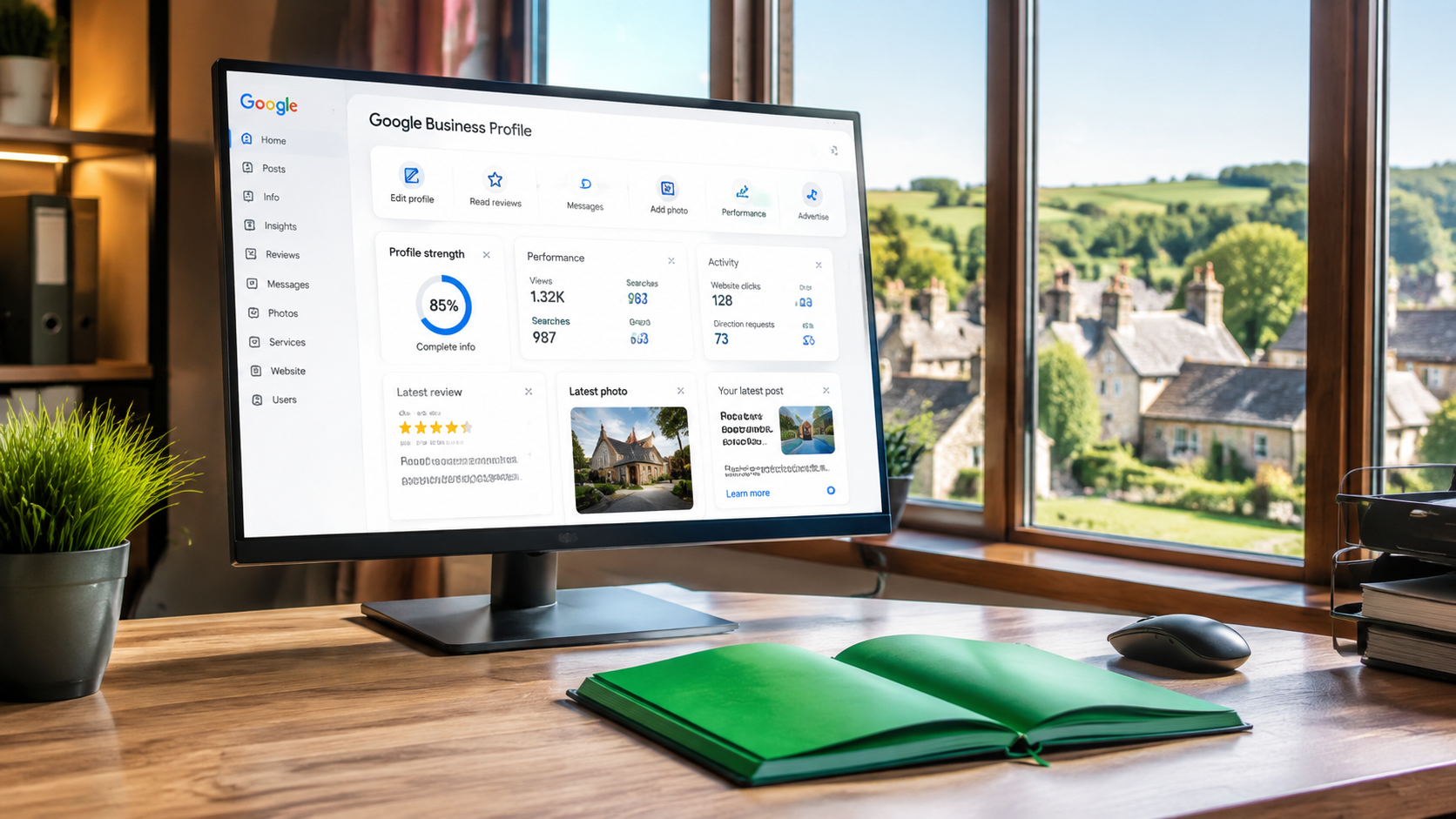
Claim your Google Business Profile and keep it up to date with your latest contact details, opening hours, and photos of your work. Encourage happy clients to leave reviews on your profile. Positive reviews boost your reputation and help your business appear higher in search results.
Blog posts can also improve your visibility. Write about common questions, seasonal advice, or tips for looking after gardens. For example, “How to prepare your garden for spring” or “Choosing the right plants for shady areas.” These articles help your site appear in search results when people look for answers to these questions.
If you serve multiple areas, create separate pages for each, but make sure each page has unique content. Do not simply copy and paste the same text with different place names.
Extras and Improvement
Some website features are not essential but can set your business apart from competitors. Live chat allows visitors to ask questions in real time. If you use this feature, make sure someone is available to respond during business hours. Quick replies build trust and can turn a casual visitor into a genuine enquiry.
Integrating your Instagram or Facebook feed onto your website helps to show that your business is active. Visitors can see recent projects, read feedback from other clients, and get a sense of your style. This can be more persuasive than static photo galleries because it shows regular activity and engagement with your audience.
Online booking tools are useful for clients who prefer to schedule appointments without making a phone call. Choose a system that is simple and reliable. Make sure the booking process is clear, with confirmation messages so clients know their request has been received.
Keep your website content up to date. Regularly add new photos of completed projects, update testimonials, and check that all links work. Outdated content or broken links can give the impression that your business is not active. Even small updates, such as a new blog post or seasonal advice, show that you pay attention to your online presence.
Regular improvement is the key to long-term results. Treat your website as an ongoing project rather than something to finish and forget.

Contact Us
If you run a landscaping or gardening business and want a website that brings in more clients, we are here to help. Our approach is built on clear design, practical features, and strategies proven to work for businesses like yours. Whether you need a new website, an upgrade, or advice on getting found online, contact us today to discuss your goals. We can review your current site, suggest improvements, and help you stand out in a crowded market.
Ready to grow your business?
Get in touch now to find out how your website can start winning more clients.