Right now, your potential customers are searching online for local businesses just like yours. But can they actually find you? Here in Devon, for example, thousands of people jump on search engines daily to find local services. If your business isn't properly optimised for Local SEO, you're basically directing those valuable customers straight to your rivals. Think about it.
For small UK businesses (especially those with 1-50 employees), mastering local search optimisation isn't just a bonus; it's absolutely essential for staying competitive. The good news? With the right Local SEO UK strategies, even a modest local business can achieve fantastic visibility and a steady stream of enquiries. Seriously.
Why Local SEO Matters More Than Ever in 2026
The digital world has changed, hasn't it? These days, local customers aren't just *browsing* search engines; they're actively using them to decide where to spend their money. If your business lacks strong local search visibility, it's pretty much invisible to those potential customers. And they could be just around the corner!
So, the challenge for small business owners is clear, isn't it? How do you cut through all that digital noise and make sure *your* business pops up when local customers are searching?
The simple answer? A systematic approach to local SEO, focusing on practical, actionable steps you can actually implement.
Step 1: Optimise Your Google Business Profile
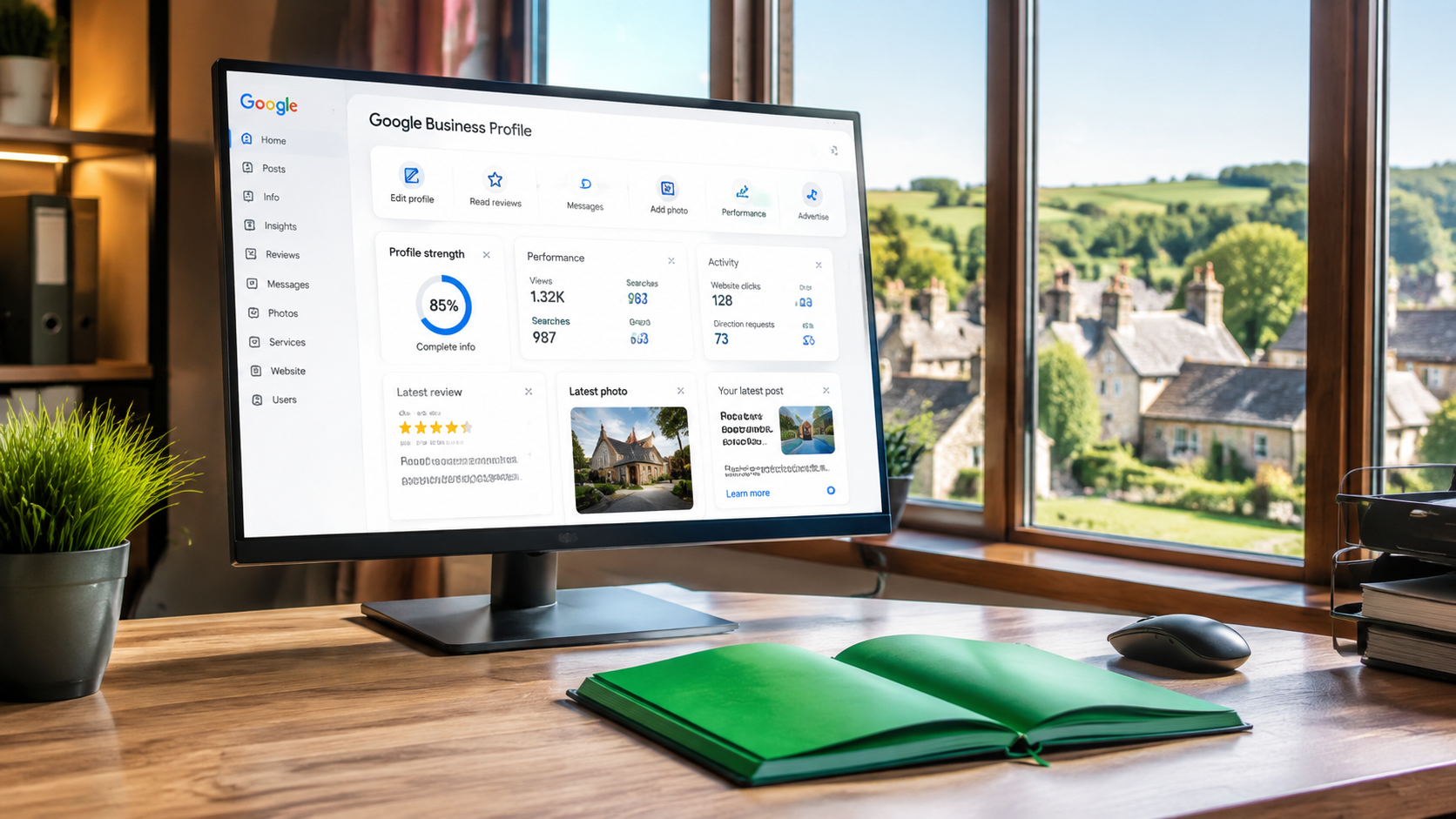
Your Google Business Profile (you might remember it as Google My Business) is pretty much *the* foundation of your local search visibility. Seriously. Think of it as your digital shopfront. And just like your physical premises, it needs to be absolutely immaculate and super inviting.
- First off, claim and verify your profile if you haven't already.
- Make sure your business name, address, and phone number (NAP) are perfectly consistent with what's on your website.
- Choose the most accurate primary and secondary categories for your business. This is crucial!
- Fill in all relevant business attributes - things like payment methods, accessibility features, and so on.
- Upload at least 10 high-quality photos. Show off your premises, your products, and (most importantly) your amazing team!
- Get into the habit of creating Google Posts at least twice a month. Share offers, news, or behind-the-scenes glimpses.
- Respond to *all* reviews, both positive and negative. And do it quickly - ideally within 48 hours.
Honestly, a fully optimised Google Business Profile can seriously boost your visibility in local searches. We've seen it firsthand. For instance, one of our Exeter-based retail clients saw a whopping 43% increase in profile views and 27% more direction requests. All within just eight weeks of completing these optimisation steps. That's real results!
Step 2: Develop a Hyper-Local Website Strategy
Your website isn't just an online brochure; it needs to scream to search engines that you're *the* relevant choice for people in your specific locations. And no, that doesn't mean just dropping your town name in once or twice. You need a truly comprehensive local content strategy.
- Build dedicated service pages for *each* location you serve. Think 'Plumbing Services in Exeter' rather than just 'Plumbing Services'.
- Pop a Google Map onto your contact page, showing your exact location. It helps customers find you!
- Make sure your NAP details are consistent across *all* your website pages. The footer is often the best spot for this.
- Feature testimonials from happy local customers, and ask them to mention their locations if possible.
- Consider creating a local resources page. Link to community organisations or useful local information.
- Develop content that directly addresses local challenges and opportunities - show you understand your community.
- Use schema markup. This little bit of code really helps search engines grasp your local relevance.
A really well-structured, mobile-friendly website is absolutely the bedrock of effective local SEO. At MidDevon Digital, we're experts at building websites specifically designed for local search visibility, making sure all those technical elements work seamlessly together to give you the best possible chance of ranking well.
Step 3: Build a Strategic Local Citation Portfolio
Citations are basically any mention of your business name, address, and phone number (NAP) on *other* websites. And here's the thing: they're crucial trust signals for local search algorithms. The absolute key? Consistency. Every single citation must match exactly. No exceptions.
- Kick things off with core directories like Yell, Thomson Local, Yelp, and any specific to your industry.
- Then, zero in on local directories for your region - think Devon Chamber of Commerce or local council business lists.
- This is vital: your NAP information must be *identical* across all listings. No typos!
- Always include your website URL and a clear business description whenever you can.
- Boost each listing by adding photos and any extra details available.
- Keep an eye on your listings. If your business details ever change, update them immediately.
Consistency is *so* important here. Even tiny differences, like 'St.' instead of 'Street', can actually dilute your local search authority. Honestly, it can be a pain. That's why lots of small businesses find citation management tools a real lifesaver for keeping things consistent across dozens of directories.
Step 4: Implement Local Keyword Strategy
For really effective local SEO, you've got to figure out and then target the exact phrases your potential customers are typing into search engines. And in 2026, that means looking beyond just broad terms, targeting hyper-local and intent-specific keywords instead. That's where the magic happens!
- Do your research to uncover location-specific keywords. Think 'accountants in Tiverton' or 'Plymouth emergency plumber'.
- If it makes sense, identify neighbourhood-level keywords too. 'Alphington coffee shop' is much better than just 'Exeter coffee shop' if you're in Alphington.
- Don't forget to target keywords with local intent, even if no location is specified. 'Near me' searches are huge!
- Develop content that's optimised for question-based local searches. For example, 'Where can I find a good mechanic in Cullompton?'
- Then, naturally weave these keywords into your website content, your meta descriptions, and your headings.
Here's what most businesses miss: You should focus on *search intent* rather than just search volume. A keyword with lower search volume but super high purchase intent (like 'emergency plumber Exeter') will almost always convert better than those high-volume, generic terms - it's all about quality, not just quantity.
Step 5: Develop a Local Review Strategy
Reviews are more influential than ever, aren't they? They impact both your search rankings and, crucially, what customers decide to buy. So, having a smart strategy for gathering and managing them can seriously boost your local visibility.
- First, set up a simple, easy-to-follow process for asking happy customers for reviews.
- Consider automated follow-up emails or text messages after service completion. They work a treat!
- Respond promptly to *all* reviews, but especially those negative ones. Show you care.
- If you notice common issues coming up in reviews, address them openly on your FAQ page.
- Keep a careful eye on anonymous reviews, which are becoming more common in 2026.
- Showcase your best reviews prominently on your website, ideally with location information.
Reviews aren't just for show; they build trust with *both* potential customers and search engines. What's interesting is, a 2026 UK government digital markets study found that positive reviews can actually increase click-through rates from local search results by as much as 35% - that's huge!
Step 6: Create Location-Specific Content
Content that genuinely speaks to local issues, events, and community needs does two amazing things: it shows your real connection to the area, and it seriously boosts your relevance for local searches.
It's a win-win.
- Put together neighbourhood guides that are relevant to your business. If you're a food business, for example, 'Best Parks in Exeter for Family Picnics' could be perfect.
- Write up case studies about your local clients (always with their permission, of course!).
- Talk about local events or sponsorships your business is involved in. Show your community spirit!
- Directly address specific local challenges that your products or services are designed to solve.
- Create content around seasonal issues that are particularly relevant to your local area.
This approach doesn't just improve your search visibility; it also clearly shows your genuine connection to the community. And for small businesses, that local relevance? It's often your biggest competitive advantage against those huge national players. Don't underestimate it.
Step 7: Leverage Local Link Building
When other local websites link back to yours, it sends incredibly powerful signals to search engines about your local relevance and authority. So, when you're building local links, always focus on quality over quantity - that's the secret.
- Team up with complementary local businesses for cross-promotion opportunities.
- Sponsor local events, sports teams, or charities - they'll often link to their sponsors, which is a fantastic bonus!
- Get involved with local business associations and chambers of commerce.
- Offer to contribute expert content to local news websites or blogs. Position yourself as a local authority.
- Create resources so genuinely valuable that other local organisations *want* to link to them naturally.
Here's another thing: a single, high-quality link from a trusted local website can honestly be worth dozens of those generic directory listings. We've seen significant ranking improvements for our local SEO clients across Devon and Cornwall. This is often through smart community partnerships that generate these kinds of authoritative local links.
Key Takeaways for Local Business Visibility
Bottom line:
Successful Local SEO for UK small businesses demands a systematic approach. The businesses truly seeing the best visibility improvements in 2026 are the ones implementing these strategies as a cohesive system, not just a bunch of isolated tactics.
- Keep your Google Business Profile absolutely immaculate. Update it regularly and respond to reviews promptly.
- Build a mobile-optimised website, loaded with location-specific content and a perfect technical setup.
- Make sure your NAP (name, address, phone) details are completely consistent everywhere your business is mentioned online.
- Put a strategic system in place for collecting and managing customer reviews.
- Always create genuinely useful content that tackles local needs and challenges head-on.
- Cultivate meaningful local relationships that naturally lead to quality backlinks.
Yes, each element is important, but here's the catch: it's the *systematic* implementation that really delivers breakthrough results. So many small businesses make the mistake of honing in on just one or two things and completely forgetting about the rest. Don't be one of them!
Start Your Local SEO Journey Today
For small businesses right across Devon, Cornwall, Somerset, and well beyond, local online visibility isn't just about showing up in search results. It's about creating a consistent, reliable flow of enquiries that actually turn into paying customers. This guide gives you a solid framework, of course. But remember: every business has its own unique needs and exciting opportunities.
Here at MidDevon Digital, we specialise in doing just that: helping local businesses build powerful online visibility systems that consistently generate enquiries. Our approach isn't about quick fixes; it combines conversion-focused websites with super targeted local SEO strategies to provide a complete solution, not just a handful of isolated tactics.
Ready to truly transform your local online presence? Then why not book your free consultation with us today? We'd love to chat about how we can help your business get found by local customers exactly when they're actively searching for what you offer. Let's make it happen!